As last month Ukraine marked four years since Russia’s full-scale military invasion in 2022, there are no clear signs of this war ending. Unfortunately, there is no shortage of wars throughout the world altogether, the latest events in the Middle East not making things better.
Meanwhile, people affected by wars are coping with significant human, economic, and environmental damage. And even though the environmental damage may be less visible than human suffering, the two issues are deeply connected. The impacts of wars extend past the battlefield, both physically and temporally, through environmental harms involving contaminated rivers, flooded mines, and damaged water-treatment plants.
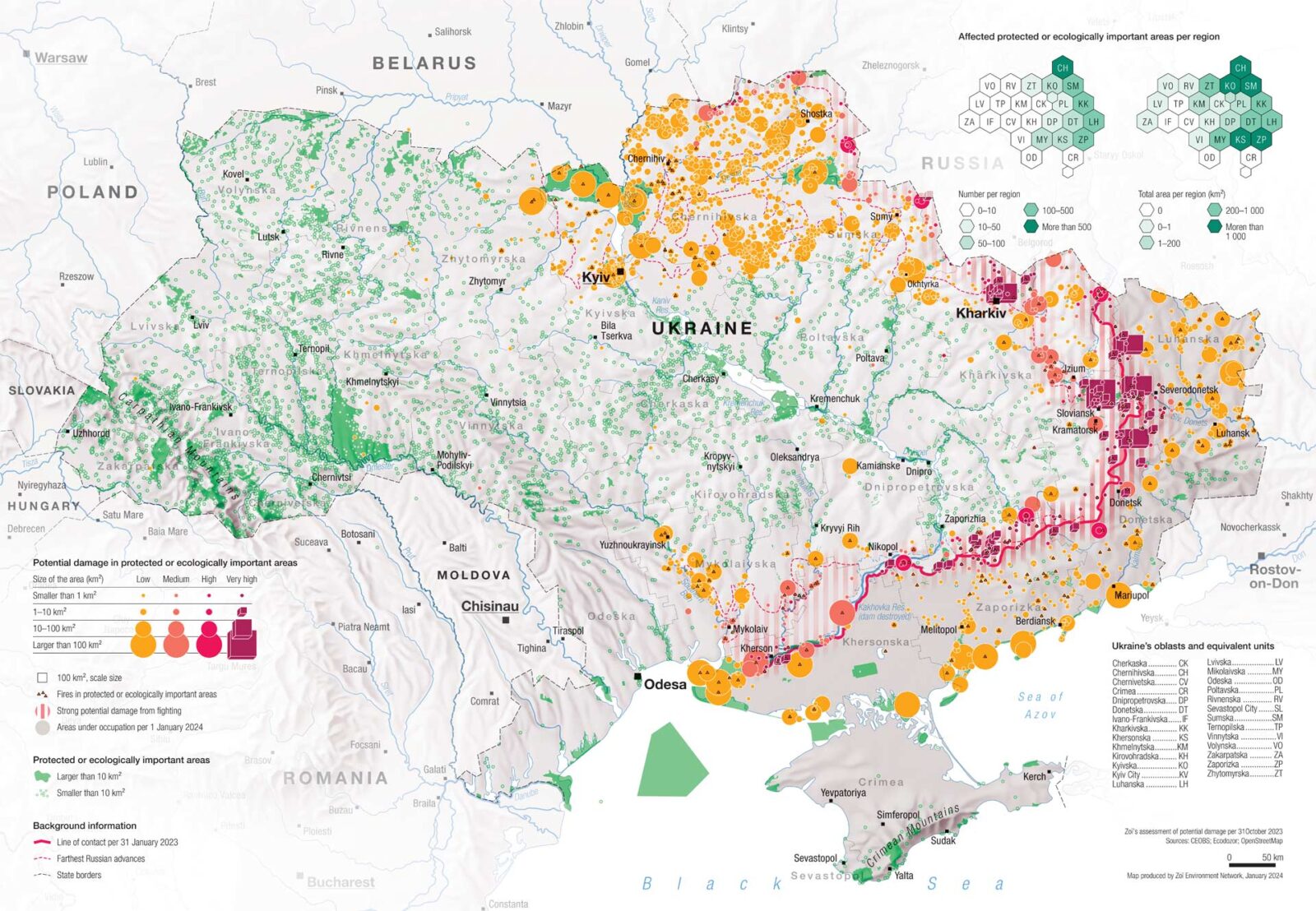
Despite the fact that the war’s environmental damage remains largely hidden, it often endures long after the conflict itself has ended. The war also exacerbates pre-existing stresses, including water crises, industrial pollution, and emergencies. Damaged industrial sites can leak toxic chemicals into groundwater. An affected energy infrastructure can release dangerous waste. Water systems can quietly break down while the world’s eyes remain on the front lines.
Making the invisible visible
Due to many and various efforts by local and international actors, the war in Ukraine has become the most extensively documented in terms of its environmental consequences. Zoï has been part of these efforts.
Already since the start of the war in the Ukrainian Donbas in 2014, Zoï has been working to make this impact more visible and understandable, and since 2022 Zoï has expanded the work to the whole of Ukraine.
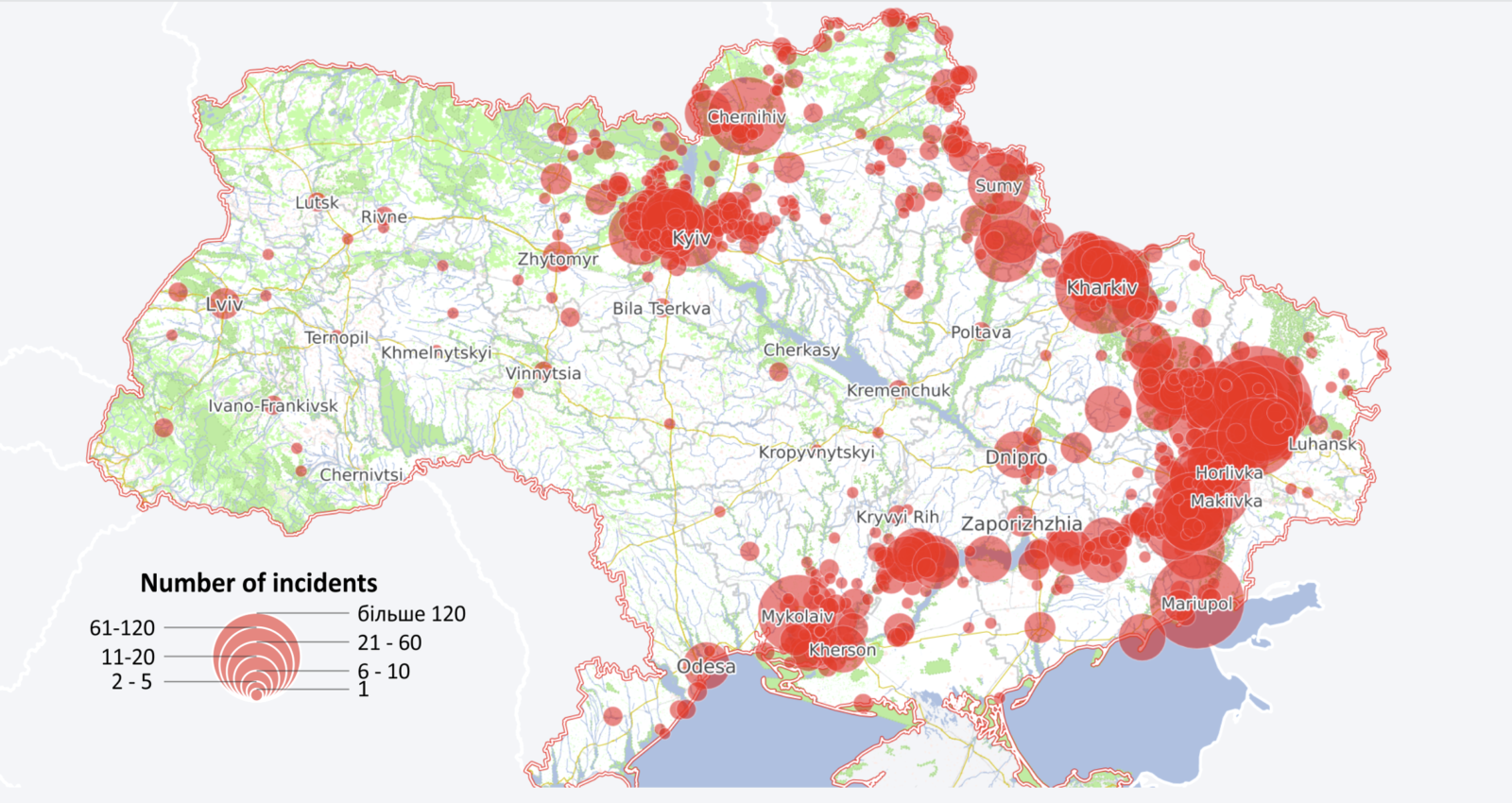
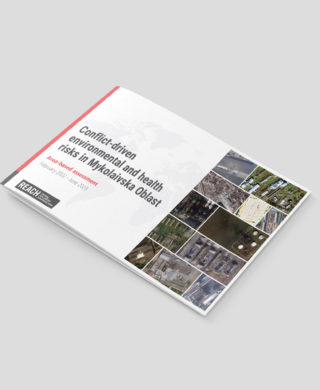
Since March 2022, gradually supported over the years by such partners as the UN Environment Programme (UNEP), the Organization for Security and Co-operation in Europe (OSCE), and the REACH Humanitarian Initiative, Zoï developed the monitoring platform Ecodozor (meaning, Environmental Watch). The platform tracks environmental incidents in areas affected by conflict, uses other ways to remotely assess the potential environmental damage, and enables scientists, local authorities, and humanitarian workers to gather and share information on environmental risks as events continue to unfold.
The Ecodozor platform uses media sources and other data to monitor war-related environmental damage and risks in Ukraine. With continuous updates and the support and cooperation of the international community and partners in Ukraine, the platform works to document the environmental risks to the extent possible.
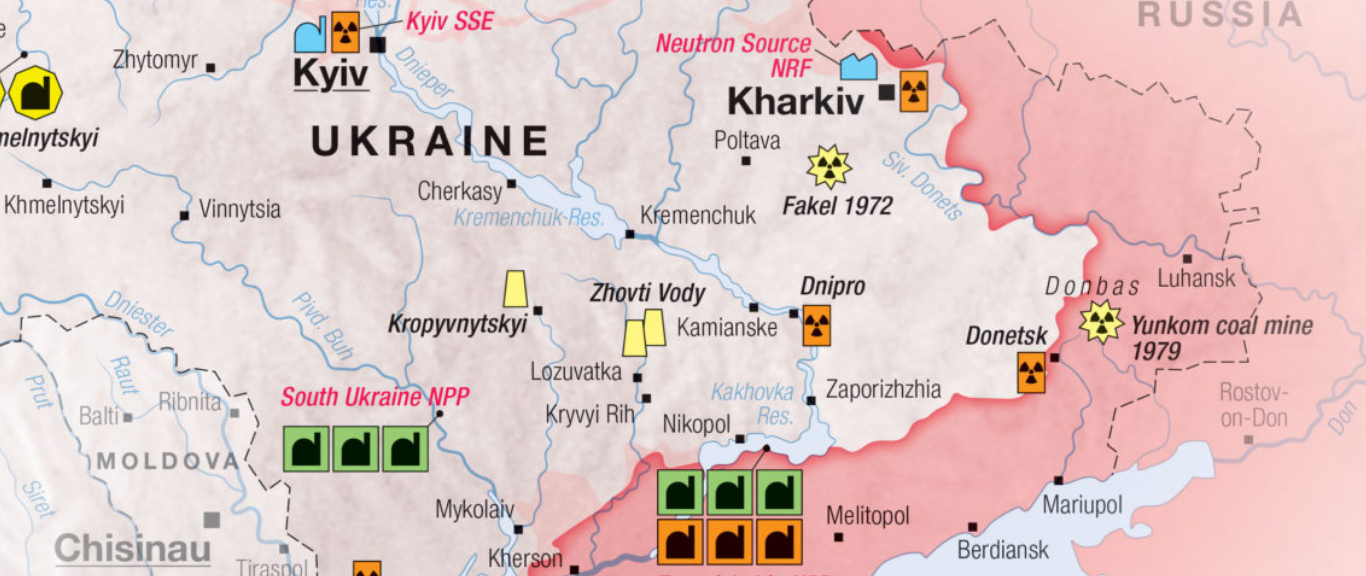
Based on a large degree on thus collected and analysed data, between 2022 and 2024, Zoï produced seven environmental briefings in collaboration with the Conflict and Environment Observatory, covering climate impacts, water resources, marine infrastructure, fossil fuels, and radiation risks.
These reports are practical tools designed to help decision-makers act in a situation where reliable information is scarce. For example, to support effective policy responses, the briefings recommend updating environmental mine action standards and developing a national strategy for a nature-positive recovery in Ukraine that embeds nature and nature-based solutions across government policies.
Zoï and the Conflict and Environment Observatory have joined forces to launch a series of thematic briefings on the environmental dimension of the war in Ukraine.
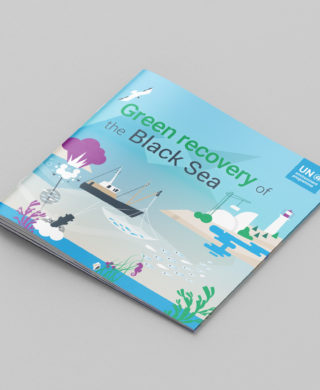
In 2024, supported by the OSCE, Zoï and CEOBS published The Environmental Consequences of the War Against Ukraine, which assesses damages and attendant risks resulting from the first year of the conflict. Alongside the report, an interactive 3D map displaying environmental damage across the Black Sea region was created. The map included information regarding the destruction of the marine environment and coastal infrastructure in and around the Black Sea – one of the world’s most fragile marine ecosystems.
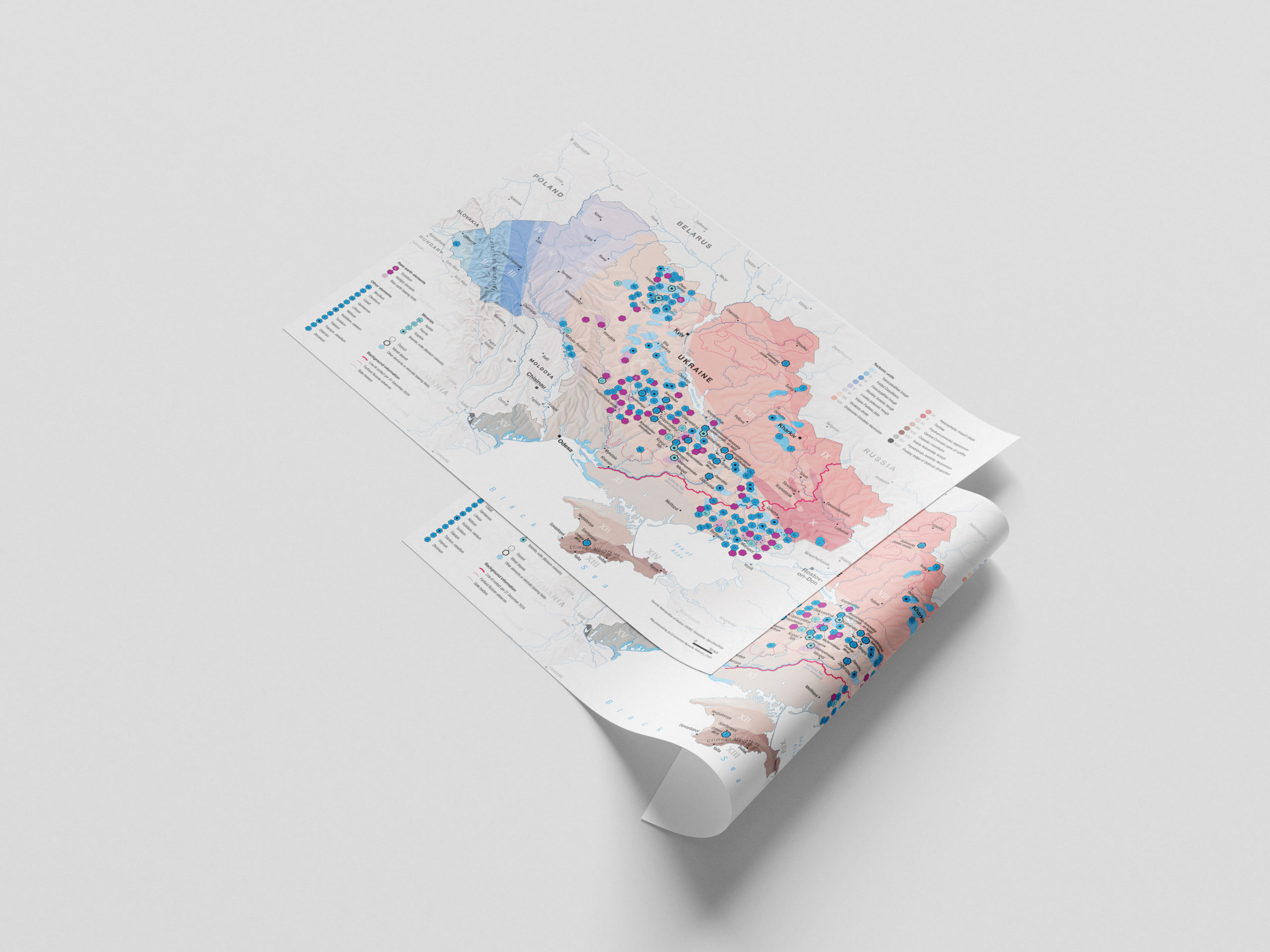
More recently, Zoï’s Matthias Beilstein created a map of Ukraine’s rare earth elements and critical minerals. The map contributed to an article published in Le Monde in February 2025, as the question of Ukraine’s natural resources has become central in global discussions about reconstruction and sovereignty.
The map displays the distribution of rare earths and other critical minerals in Ukraine, and identifies which deposits are currently being extracted.
Environmental damage increases human suffering and creates problems that can last for generations. Documenting such damage helps shape reconstruction plans, supports accountability, and gives communities a clearer path toward recovery. To explore Zoï’s maps, briefings, and interactive tools on the war in Ukraine, visit our Products page.