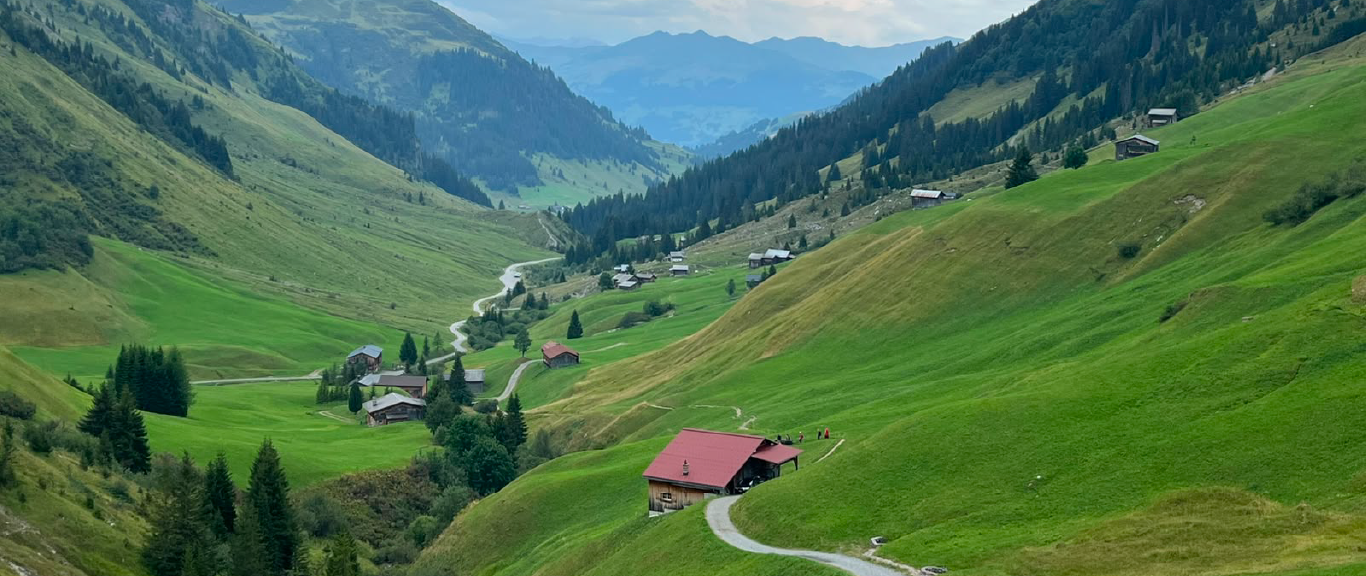
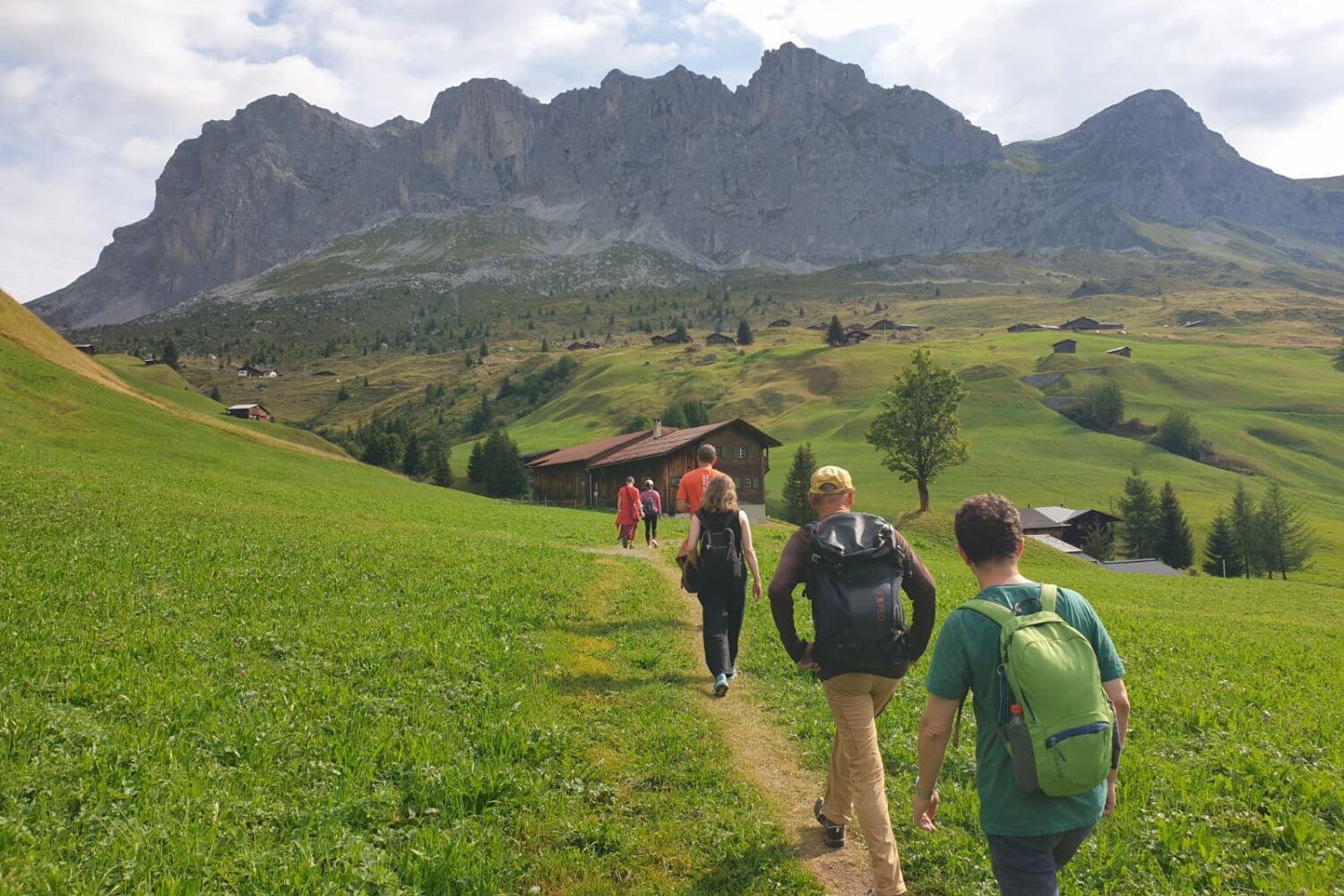
At first glance, St. Antönien, located in the Grisons in the East of Switzerland, seems far removed from the challenges organizations face today. At 1,450 meters, it offered a welcome escape from Geneva’s summer heat and, more importantly, a landscape that has long demanded adaptation. Walser people have lived in the steep valleys around St. Antönien for centuries, learning how to make a life in the harsh Alpine environment. It felt like the right place to spend a few days thinking about how, and why, we adapt to change.
The Walser people
According to the Swiss National Museum, between approximately 1150 and 1450, Walser communities left the upper Rhône valley in Valais and settled across what is now France, Italy, Switzerland, Liechtenstein, Austria, and Germany, adapting their agriculture, architecture, and ways of living to their new place. Their migration was driven by several factors, and historians still debate why they left; the reasons include population growth, economic pressures, and also harsher climatic conditions in the high mountains during ‘the Little Ice Age’ (1300-1850).
Since the Walser migrations, most of the challenges have changed, but a familiar question remains: what do we do when the conditions around us change? Climate change is reshaping where and how people live; economic pressures are transforming institutions; funding is becoming tighter, and political conditions are shifting rapidly.
For the Walser, adapting was crucial to cope with a harsh environment. For Zoï, it means finding new ways to respond to the challenges we work on.
Why do we adapt?
During our three-day retreat, we reflected on nearly 20 years of Zoï’s history and looked to the future. Despite our different perspectives, one idea kept coming up: our strength lies in Zoï’s authenticity and creativity in finding ways to respond when the usual methods are no longer enough, in coming up with new ideas, connecting different perspectives, and creating possibilities where challenges are increasingly interconnected [Explore Zoï’s Annual Reports].
The challenges we face today are enormous, and many organizations, like us, are working through the same uncertainty. This summer, our retreat in St. Antönien reminded us that difficult conditions can push us to build something different, and perhaps, something better.
Credit: Johanna Zwahlen
Featured image: Zoïs sighted from above. Credit: Alex Mackey