Responding to climate change in mountains demands cooperation between actors who do not always share the same priorities, resources, or perception of the problem. So how do we help people grasp this complexity for more effective and inclusive decision-making?
Much of Zoï’s work involves translating environmental information and scientific research into accessible, relevant information for the public and decision-makers. In 2026, Zoï developed Tamlar 2.0 to support decision-makers through an interdisciplinary framework, stimulating dialogue, collaboration and consensus. Instead of accessing reports or briefs, this role play game invites people to step inside a transboundary negotiation themselves.
Tamlar 2.0 aims to help participants explore and understand the perspectives, priorities, and needs of different stakeholders in a transboundary mountain-range project, making the complexity of regional governance and the need for cross-border collaboration tangible, while encouraging a reflective approach to climate change adaptation measures, different risks, and possibilities for cooperation in mountain contexts.
With Tamlar 2.0, Zoï’s work includes moderating its sessions and organizing workshops tailored to different contexts and audiences.
The fictive mountain range
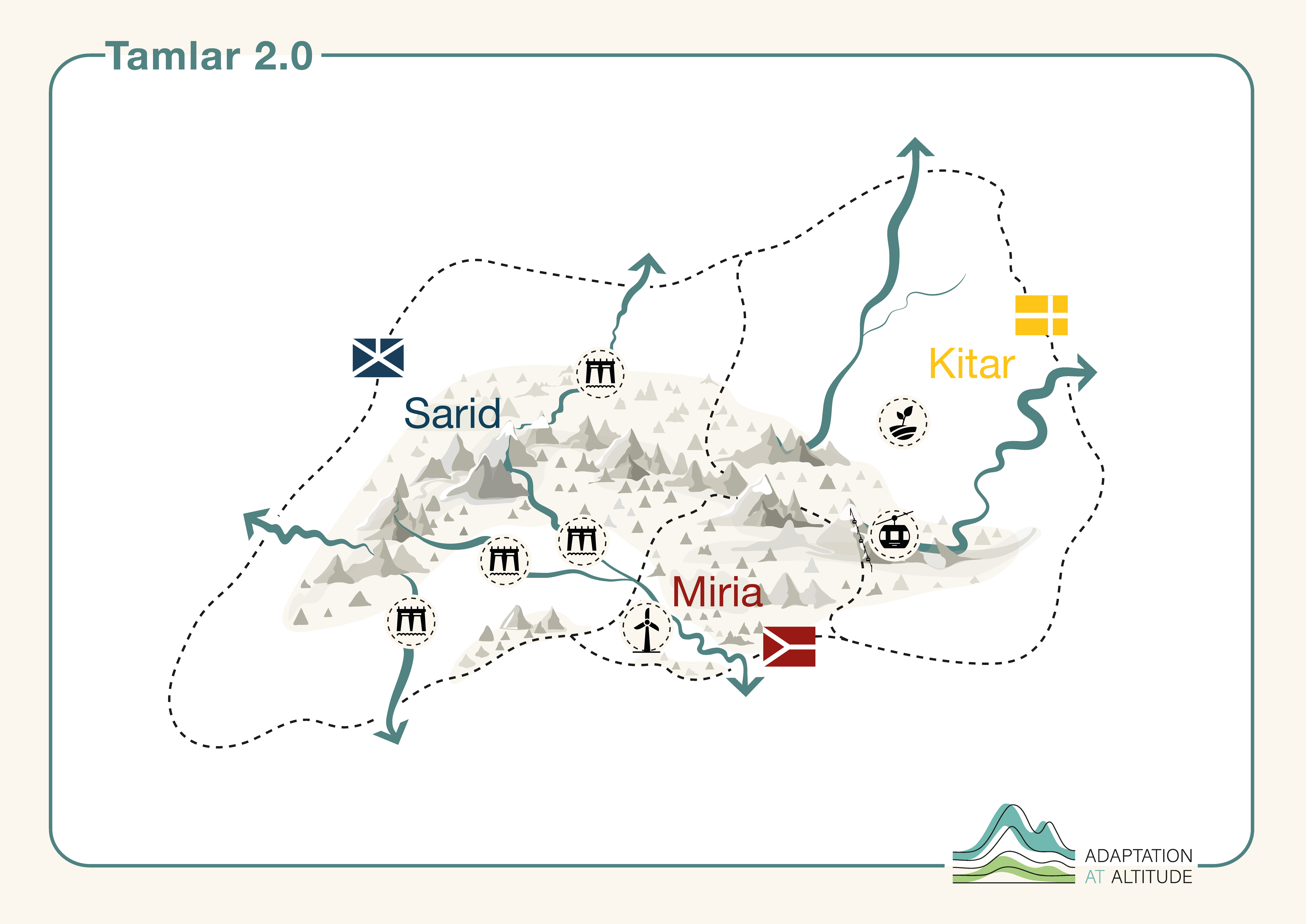
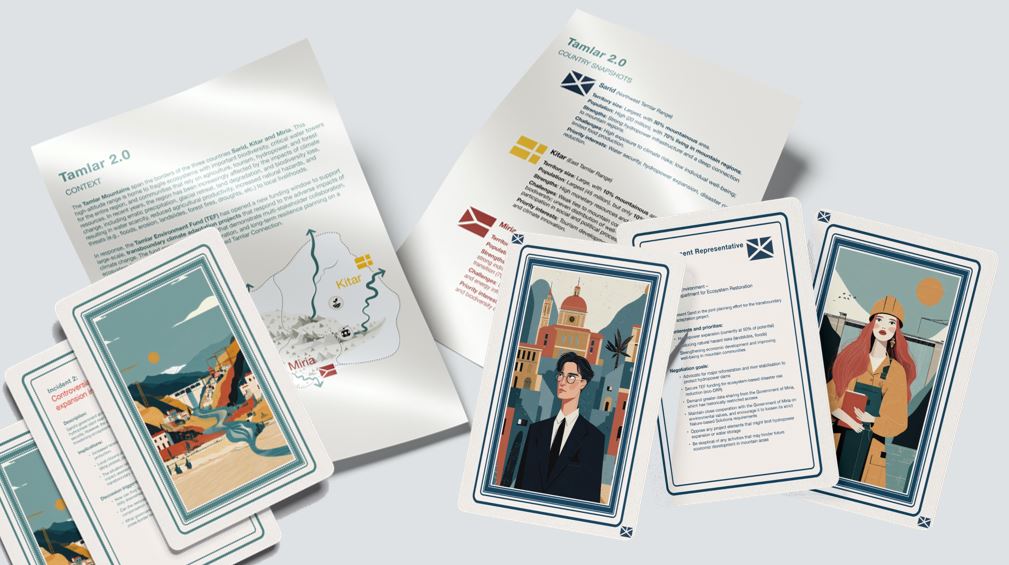
The exercise centres on the fictive Tamlar Mountain Range, a high-altitude region of fragile ecosystems, rich biodiversity, and critical water resources spanning three countries with different priorities. Sarid, the largest, focuses on expanding hydropower infrastructure; Miria, a downstream country, is characterized by strong community cohesion and engagement; and Kitar has weaker ties to mountain communities and a strong interest in developing tourism. Eight stakeholders from the fictive Tamlar Mountain Range participate in the stakeholder consultation meetings, representing government, research, business, and local community perspectives across Sarid, Kitar, and Miria.
Cards representing the eight stakeholders from the fictive Tamlar Mountain Range.
The fictive Tamlar Mountains span the borders of Sarid, Kitar, and Miria, forming a high-altitude region characterized by fragile ecosystems, rich biodiversity, and critical water resources for the entire area.
Bringing Tamlar 2.0 to life
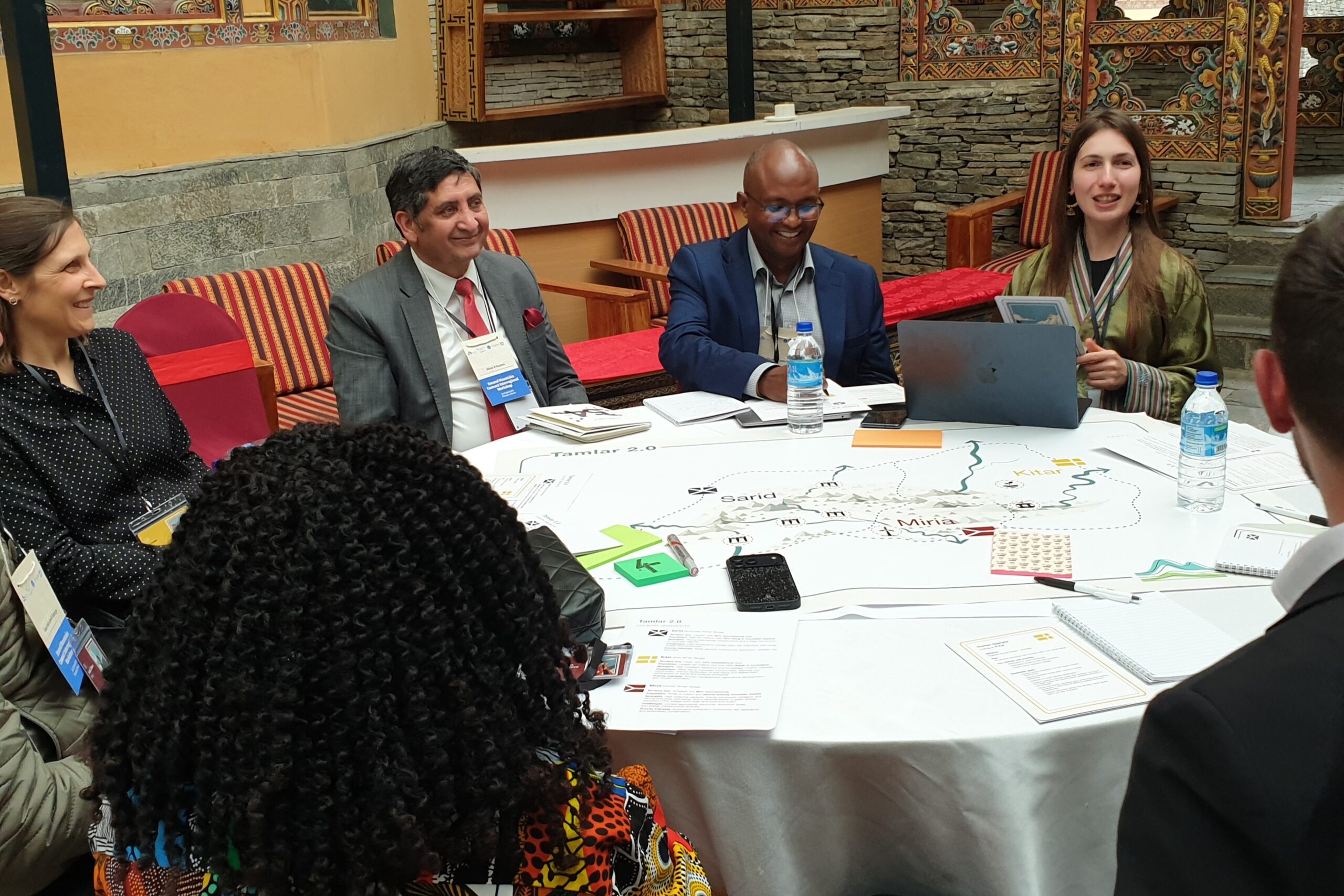
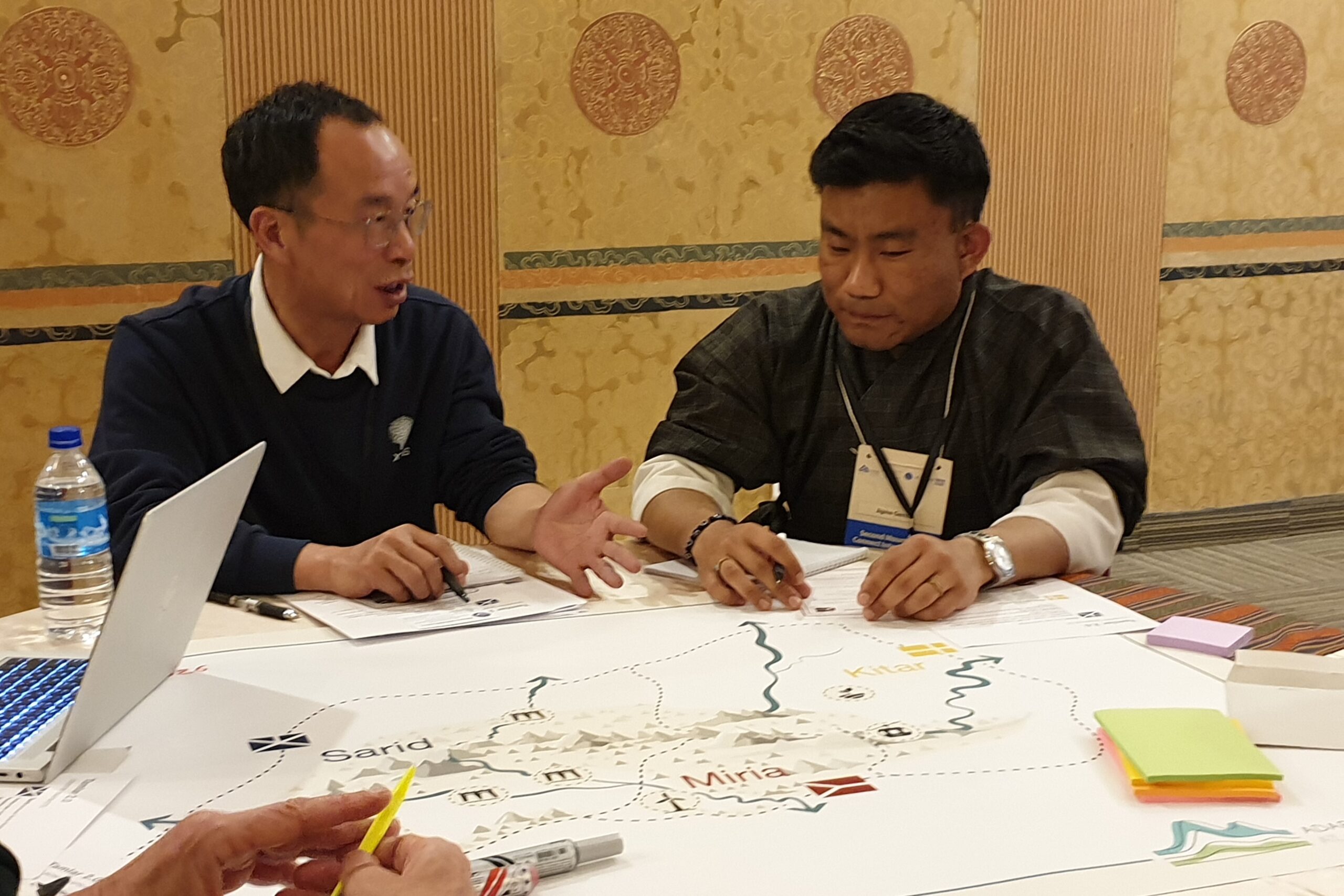
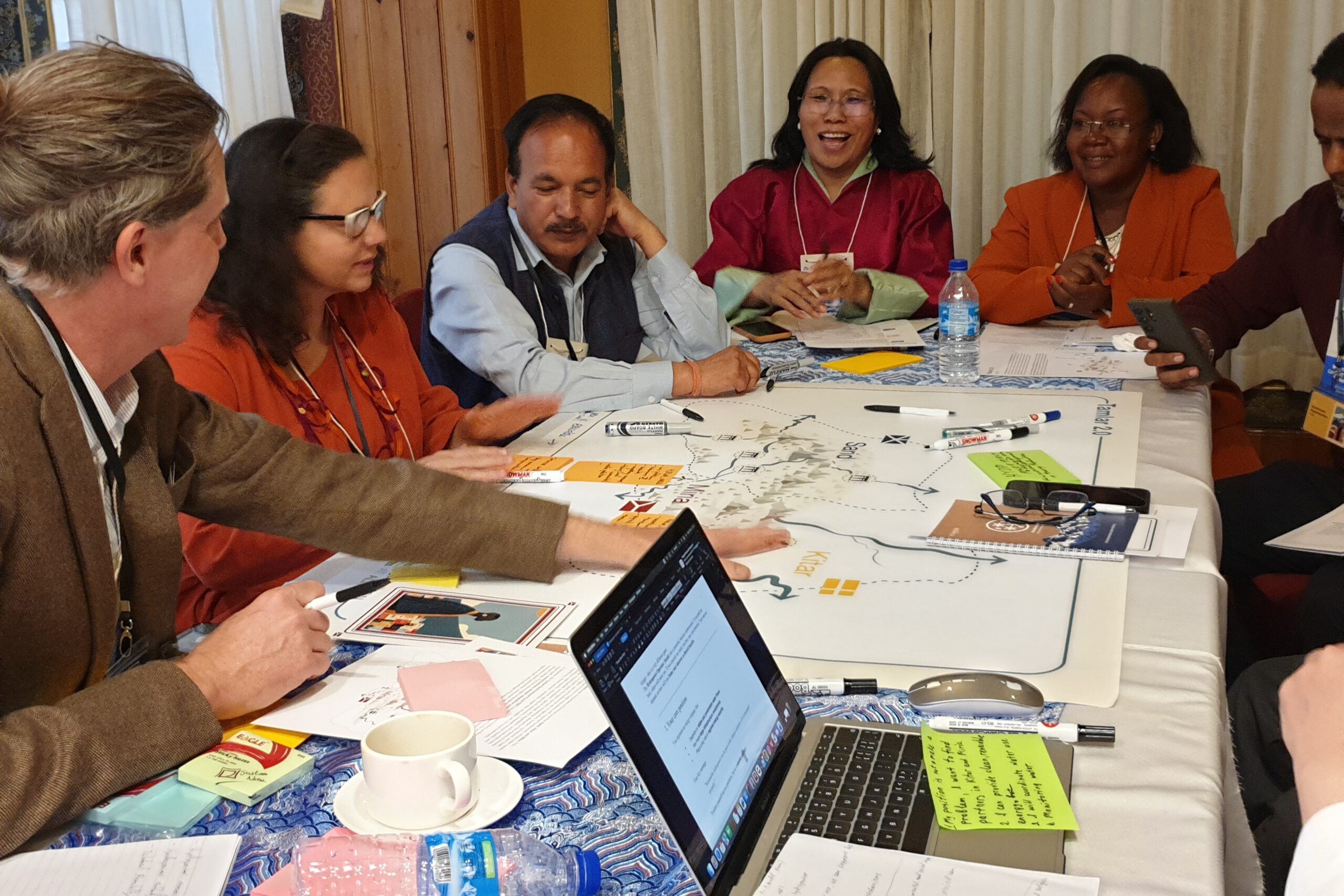
Tamlar 2.0 was applied for the first time during the second Mountains Connect workshop, organized by ICIMOD and UNEP in Thimphu, Bhutan, from 20 to 22 April 2026. At the workshop, participants worked independently of their actual institutional affiliations and took on roles as government representatives, farmers, researchers, energy providers, tourism operators, and civil society actors.
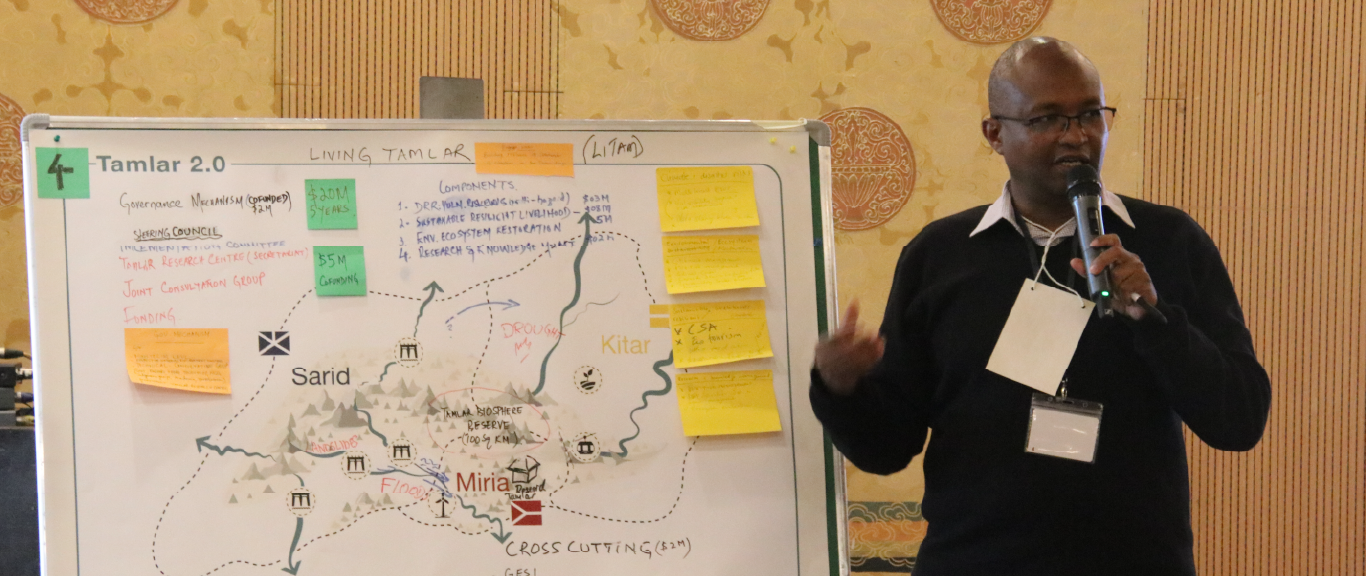
Over two stakeholder meetings, five groups negotiated the implementation of a transboundary ecosystem restoration project. Through dialogue and negotiation, they co-developed ideas and innovative solutions combining compromise and cooperation for regional climate adaptation.
Participants described the experience as engaging and enjoyable, highlighting the value of taking on a different role from their everyday work contexts. At the same time, the fictive Tamlar Mountain Range reflected challenges very similar to those they face in reality. The exercise fostered creativity, collaboration, and a deeper understanding of the complexity of decision-making in mountain regions, as well as the need for strengthened coordination mechanisms for transboundary cooperation and enhanced collaboration across sectors and borders.
Impressions from the Tamlar 2.0 simulation exercise, organized as part of the second Mountains Connect workshop held in Thimphu, Bhutan, from 20 to 22 April 2026.
Photos: Johanna Zwahlen
Would you like to bring Tamlar 2.0 to your organization?
Tamlar 2.0 materials are openly available for others to use and adapt for non-commercial purposes, with appropriate credit to the Adaptation at Altitude programme.
We hope that the fictional Tamlar Mountains will reach other workshops, regions, and conversations about the very real future of the world’s mountains.
Zoï can help to moderate, adapt Tamlar, and organize the workshop as needed.
Tamlar 2.0 – A Simulation Exercise for Regional Mountain Range Governance was developed in the context of the second Mountains Connect workshop, organized by ICIMOD and UNEP as part of the Adaptation at Altitude. Concept and design by Zoï Environment Network.